
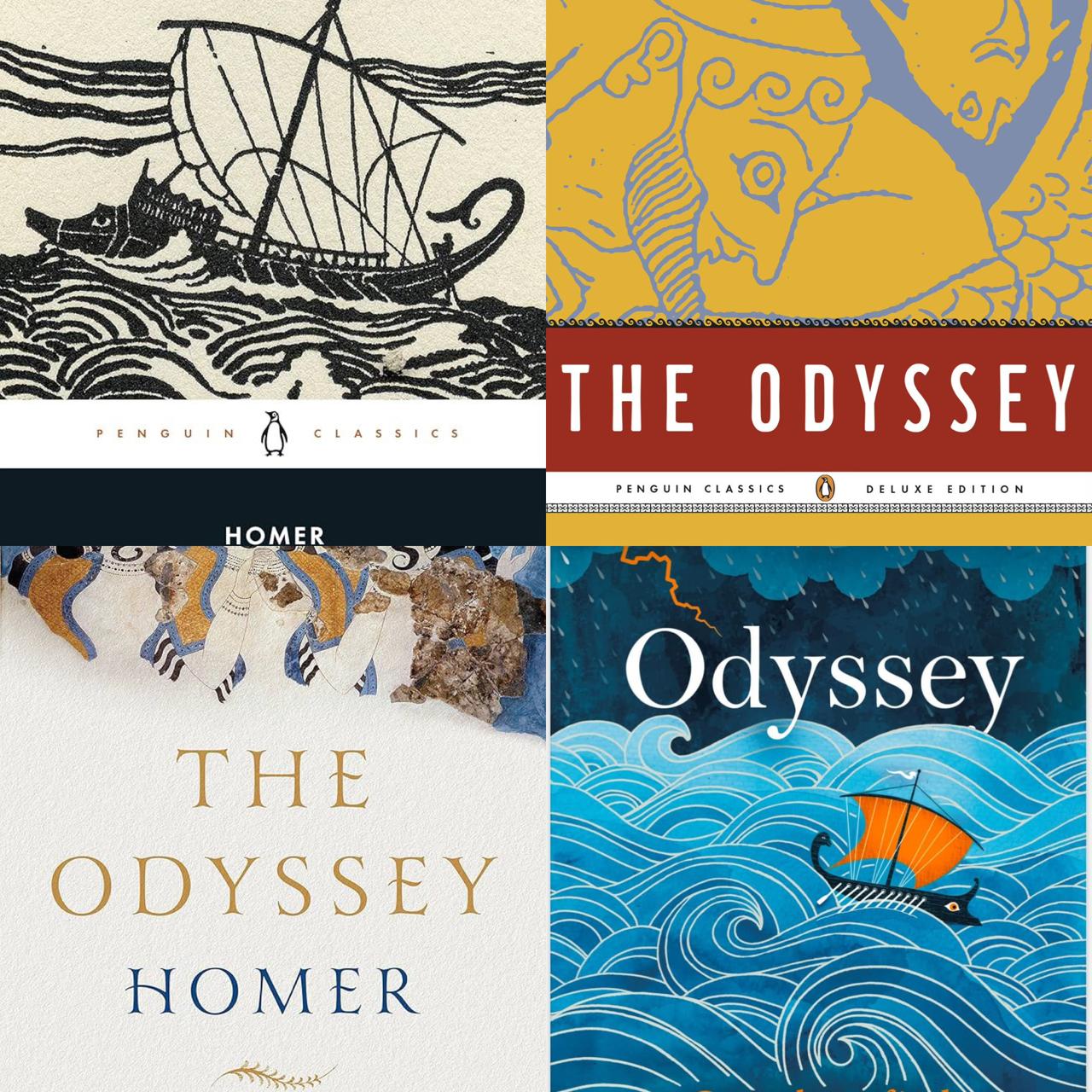
A poem from ancient Greece, chronicling a 10 year journey home. At the center of the story is Odysseus, a Greek military general who is instrumental in winning the Trojan war. Not through brute force, but through the cunning idea of the Trojan horse. However, as the book unfolds, he discovers that it’s never a good idea to anger the gods, especially Poseidon, the God of the Sea. The tale of the Odyssey is captivating because it takes you on an epic adventure by sea, and introduces some of the most enigmatic characters along the way. Be it the Cyclops, Circe or the Sirens, each character has an interesting back story, “questionable” birth stories and is such a complicated person. The story has fantasy, adventure and moral lessons on arrogance, humility and the cost of war. Some that I still find relevant today. Also relevant today, is the central theme of “xenia”, the rules of being a good host and a good guest. Through the story, instances of transgressions of the rules of xenia are punished by the onlooking Gods.
This is one of my favourite books, and I’ve read many versions of it. I am posting a new review since we are well into Odyssey season, with the release of the movie, and I’m pretty sure there is renewed interest in the book. I seriously recommend reading one of these before heading out to the movie.
For a light accessible read that tells the story in a narrative format, the Stephen Fry version is perfect. It’s peppered with fantastic anecdotes, references to other texts, and even comparisons with different translations. While this book wasn’t around when I first read the Odyssey, I would recommend it as a first point of contact for all ages, teen to adult. I love that it starts with the poem Ithaca. The introduction is simply written, pretty much gets the reader up to speed with all the context from the Iliad one may need, to embark on the long journey home with Odysseus. If you like this book, you might want to also check out Stephen Fry’s narration of the Iliad, titled Troy, and other books in his Greek Mythology series.
If you are a purist, and want the whole literary experience, not just the excitement of the story, the translations by Emily Wilson and Robert Fagles are both good. Emily Wilson is one of the first women to translate the Odyssey into English, which is surprising since it’s a 2700 year old epic. Her choice of words feels deliberate and well thought out. She does not use derogatory terms for women, and this was something that stood out to me as a bit different from Fagles' translation. For example, when Odysseus’ son, Telemachus, punishes the handmaids of Penelope for sleeping with her suitors, Wilsons translation interprets his dialogue calling the women girls, while Fagles uses more derogatory language.
My list of recommendations would be incomplete without mentioning the first Penguin Classic ever, EV Rieu’s translation of the Odyssey, which was later revised by his son. If you want to read the book in a narrative format, but retain feel of an ancient tale, I would recommend this book, over the more modern Stephen Fry version.
I have never before explored the translation of a work by so many different authors, but I do find it interesting how important a choice of words can be. Just as an example, in the three translations above, the choice of words is telling. In the first few lines of the book, Wilson describes Odysseus as a “complicated man”, Fagler describes him as “the man of twists and turns” and EV Rieudescribes him as “that resourceful man”.
Now, if your interest in Greek mythology is piqued by reading any of these, or watching the movie, there are many companion books to explore. My favourite among them is A Thousand Ships, the review of which is already on my website. https://zoyasbooks.com/pdp/teenagers/a-thousand-ships